Introduction
As hydrogen solidifies as a cornerstone of the global clean energy transition, efficient and safe storage remains a critical technological priority. From industrial gas suppliers to hydrogen fueling infrastructure, storage systems ensure operational reliability, transportation efficiency, and regulatory compliance.
Over the past decade, hydrogen storage has evolved from traditional cylinder bundles and quad systems to advanced high-pressure and composite solutions. This article explores the latest trends and their impact on industrial and energy applications.
Why Hydrogen Storage Technology Matters
Hydrogen, the lightest element, has low volumetric energy density at ambient conditions (0.09 kg/m³). Practical storage requires compression, liquefaction, or advanced containment.
The method chosen affects safety, transportation efficiency, infrastructure costs, regulatory compliance, and project feasibility.
Traditional Hydrogen Storage: Quad Cylinder Systems
What Are Quad Systems?
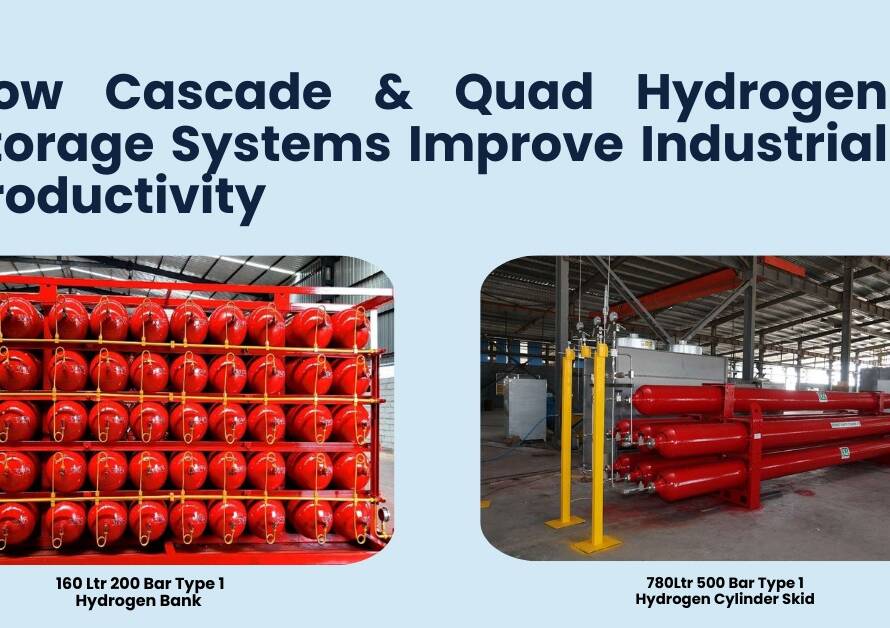
Quad systems bundle four high-pressure gas cylinders (typically 150-250 bar operating pressure) in a structural frame for handling and transport. They serve industrial bulk hydrogen supply.
Key Features:
- Portable, modular design
- Used in manufacturing, refineries
- Cost-effective for moderate demand
Advantages:
- Easy installation
- Lower upfront costs
- Fits distributed supply
Limitations:
- Lower density
- Frequent refills
- Higher transport needs
Quad systems persist but yield to higher-capacity options amid rising demand.
Shift Toward High-Pressure Hydrogen Storage
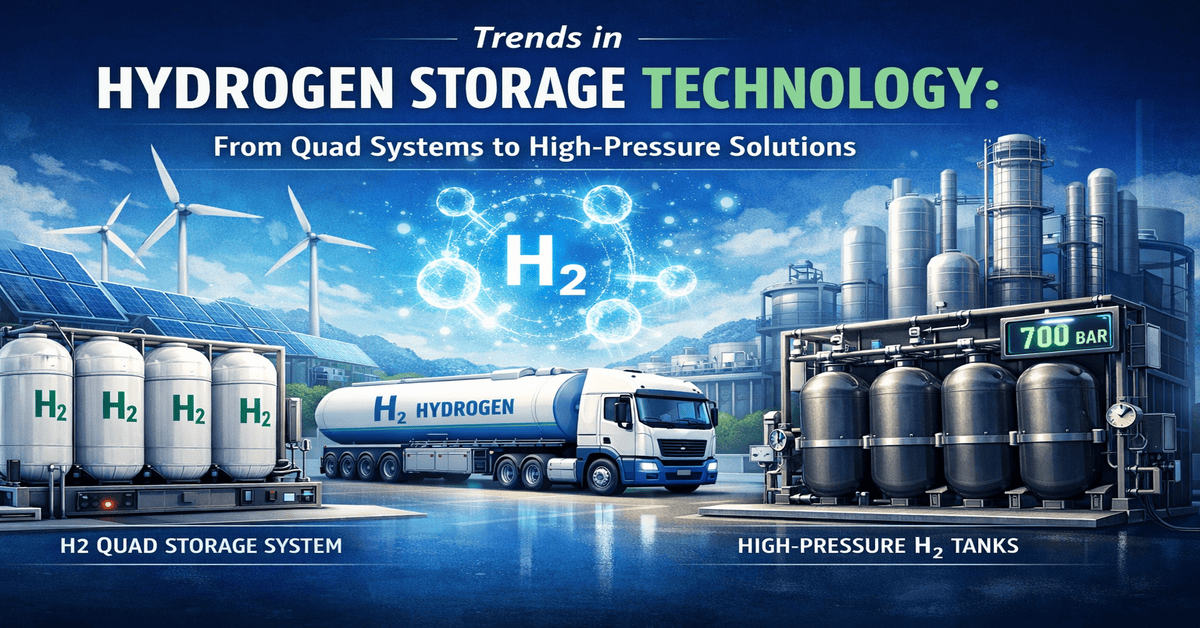
A key trend: systems at 350 bar, 500 bar, or 700 bar (standard for fuel cell vehicles). Higher pressures boost density, shrinking volumes for better logistics.
Benefits:
- Greater capacity
- Lower costs
- Suited for refueling stations and supply chains
Composite Cylinder Technology (Type III & Type IV)
Lightweight composites dominate modern storage.
Type III Cylinders:
- Aluminum liner, carbon fiber overwrap
- High strength-to-weight; transport staple
Type IV Cylinders:
- Polymer liner, full carbon fiber
- Lightest option; highest pressure tolerance
- Minimal corrosion
These enable mobility, aerospace, and decentralized energy.
Emerging Trends in Hydrogen Storage
- Modular Tube Trailers: High-pressure for long-haul transport
- Liquid Hydrogen Storage: At -253°C (-252.9°C boiling point), high density for aerospace/export
- Underground Storage: Salt caverns/reservoirs for seasonal scale
- Solid-State (R&D): Metal hydrides for low-pressure safety
Safety & Regulatory Considerations
Higher pressures demand rigorous standards: pressure certifications, leak detection, ventilation, fire protection, and norms like ISO 11119, ASME BPVC, PED, ATEX.
Integrated hydrogen analyzers ensure real-time compliance.
Industrial Applications Driving Innovation
Demand surges in refueling stations, green H2 plants, refining, power, steel, and semiconductors—necessitating scalable, efficient storage.
The Future of Hydrogen Storage
Expect advances in:
- higher pressures with safety
- lighter composites
- cost reductions via scale
- digital monitoring
- renewable integration.
Conclusion
Hydrogen storage evolves from quads to high-pressure/composite systems, enhancing density, cutting costs, and enabling deployment.
For hydrogen infrastructure, optimal storage ensures safety, compliance, and efficiency—foundational for a sustainable energy future.