



Introduction
As the global transition toward clean energy accelerates, hydrogen is emerging as a key solution for reducing carbon emissions across industries. From transportation and power generation to industrial manufacturing, hydrogen is playing a major role in building a sustainable energy future. However, one of the biggest challenges in the hydrogen economy is ensuring safe, efficient, and reliable hydrogen storage infrastructure.
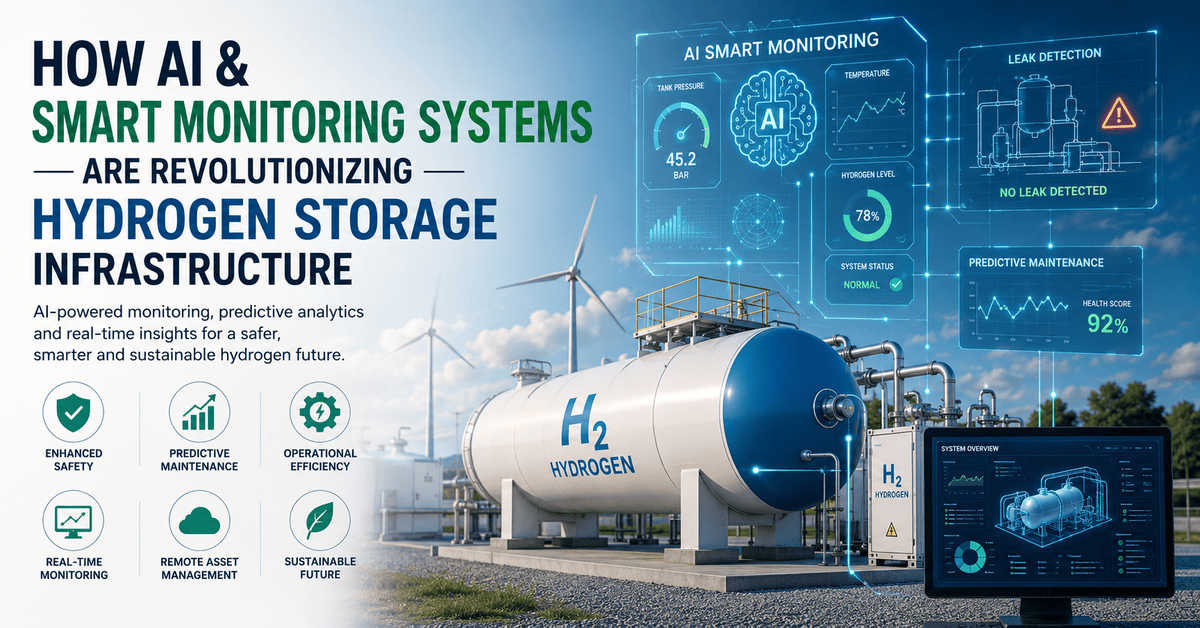
Traditional storage systems often rely on manual inspections and conventional monitoring methods, which may not provide real‑time insights into storage conditions. This is where Artificial Intelligence (AI) and smart monitoring systems are transforming the landscape. By integrating intelligent sensors, predictive analytics, automation, and real‑time monitoring technologies, industries can significantly improve the safety, efficiency, and performance of hydrogen storage systems.
The Growing Need for Smarter Hydrogen Storage Solutions
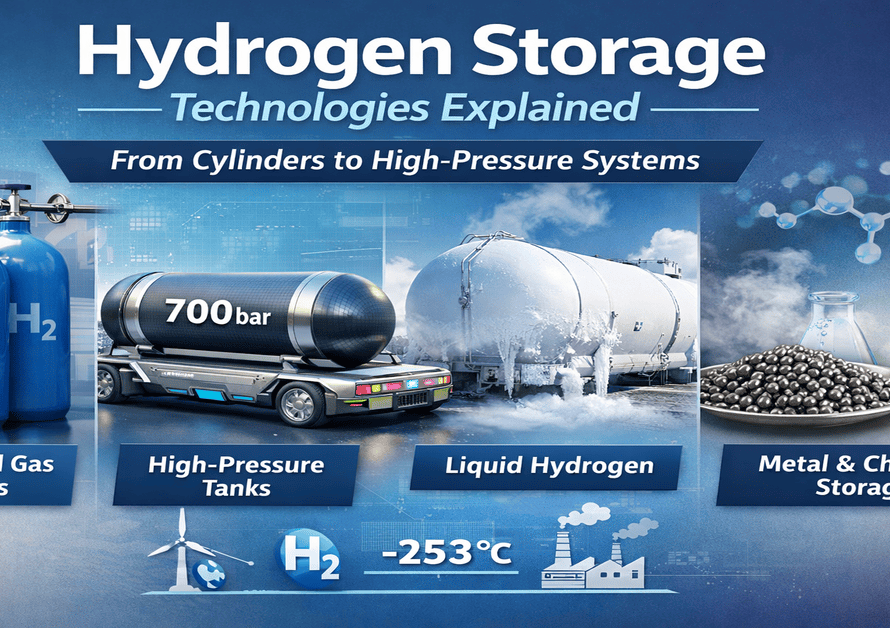
Hydrogen is highly flammable and requires precise handling and storage conditions. Whether stored as compressed gas, liquid hydrogen, or through metal hydride and other solid‑state technologies, maintaining optimal pressure, temperature, and leak detection is critical. Hydrogen also has a very low ignition energy, making early leak detection and rapid response especially important.
Conventional monitoring systems can sometimes fail to detect early warning signs of equipment degradation or system inefficiencies. As hydrogen adoption expands globally, industries are increasingly investing in AI‑powered infrastructure that can provide:
- Continuous real‑time monitoring
- Automated fault detection
- Predictive maintenance
- Remote asset management
- Enhanced operational safety
- Reduced downtime and maintenance costs
Smart monitoring systems are helping organizations shift from reactive maintenance to proactive infrastructure management.
How AI Is Transforming Hydrogen Storage Infrastructure
- Predictive Maintenance for Improved Reliability
AI‑powered predictive maintenance systems analyze data collected from sensors installed across hydrogen storage facilities. These systems identify patterns and detect abnormalities before equipment failures occur.
For example, AI algorithms can monitor:
- Pressure fluctuations
- Temperature variations
- Valve performance
- Tank integrity
- Compressor efficiency
By identifying potential issues early, operators can perform maintenance before costly failures or safety incidents occur. This helps reduce downtime and extends the lifespan of storage infrastructure.
- Real‑Time Leak Detection and Safety Monitoring
Hydrogen leaks can be difficult to detect due to hydrogen’s colorless, odorless, and highly diffusive nature. Smart monitoring systems equipped with AI‑driven analytics can quickly identify leak patterns and trigger instant alerts.
Advanced sensors combined with machine learning can:
- Detect micro‑leaks in pipelines and storage tanks
- Analyze abnormal gas concentration levels
- Trigger automated emergency responses (e.g., shutdowns, ventilation, isolation)
- Improve worker and facility safety
Real‑time monitoring significantly reduces the risk of accidents and helps ensure compliance with industrial safety standards.
- Intelligent Energy Management
Hydrogen storage facilities often require efficient energy management to optimize compression, cooling, and storage processes. AI systems can analyze energy consumption patterns and recommend operational adjustments to improve efficiency.
Benefits include:
- Lower operational costs
- Reduced energy wastage
- Optimized storage cycles
- Improved overall system performance
AI‑driven energy optimization also supports sustainability goals by reducing the carbon footprint of hydrogen infrastructure.
- Digital Twin Technology for Infrastructure Optimization
Digital twins are virtual replicas of physical hydrogen storage systems. AI‑powered digital twins allow operators to simulate different operating conditions, monitor equipment health, and predict future performance.
This technology enables:
- Faster decision‑making
- Risk assessment and scenario analysis
- Improved infrastructure planning
- Better operational efficiency
Digital twins are becoming increasingly valuable for large‑scale hydrogen storage facilities and industrial hydrogen networks.
Role of IoT and Smart Sensors in Hydrogen Monitoring
The Internet of Things (IoT) is another key technology driving smart hydrogen infrastructure. IoT‑enabled sensors continuously collect and transmit real‑time data from storage systems to centralized monitoring platforms.
These smart sensors can monitor:
- Pressure levels
- Temperature
- Humidity
- Hydrogen concentration
- Structural integrity
When integrated with AI systems, this data becomes highly valuable for predictive analytics and automated operational control.
Benefits of AI & Smart Monitoring Systems in Hydrogen Storage
|
Benefit |
Description |
|
Enhanced Safety |
AI‑driven systems improve hazard detection and enable faster emergency responses, reducing operational risks. |
|
Increased Operational Efficiency |
Automation and predictive analytics help optimize storage operations and minimize manual intervention. |
|
Reduced Maintenance Costs |
Predictive maintenance reduces unplanned downtime and lowers repair expenses. |
|
Improved Regulatory Compliance |
Continuous monitoring helps organizations maintain compliance with safety and environmental regulations. |
|
Scalable Infrastructure Management |
Smart systems make it easier to manage large‑scale hydrogen storage networks efficiently. |
Future of AI in Hydrogen Infrastructure
As hydrogen adoption continues to grow, AI and smart monitoring technologies will become even more important. Future advancements may include:
- Autonomous hydrogen storage facilities
- AI‑powered robotic inspections
- Advanced predictive risk modeling
- Cloud‑based hydrogen infrastructure management
- Integration with renewable energy systems and smart grids
The combination of AI, IoT, and automation will play a major role in making hydrogen storage safer, smarter, and more commercially viable.
Conclusion
AI and smart monitoring systems are revolutionizing hydrogen storage infrastructure by enhancing safety, improving operational efficiency, and enabling predictive maintenance. As industries continue investing in clean energy solutions, intelligent hydrogen storage technologies will become essential for supporting large‑scale hydrogen adoption.
Organizations that embrace AI‑driven monitoring and automation will be better positioned to build reliable, efficient, and future‑ready hydrogen infrastructure for the evolving green energy economy.