



Introduction
India is rapidly advancing toward a cleaner and more sustainable transportation ecosystem. While electric vehicles (EVs) have gained significant attention in recent years, hydrogen-powered mobility is emerging as another promising solution for decarbonizing the transport sector. At the center of this transformation are Hydrogen Refueling Stations (HRS)—the critical infrastructure needed to support hydrogen fuel cell vehicles (FCEVs).
As the government pushes forward with the National Green Hydrogen Mission (NGHM) and invests in hydrogen mobility projects, the development of hydrogen refueling stations is becoming a key focus area. These stations have the potential to revolutionize long-distance transportation, heavy-duty logistics, public transit, and commercial fleets, while helping India reduce its dependence on fossil fuels.
Understanding Hydrogen Refueling Stations
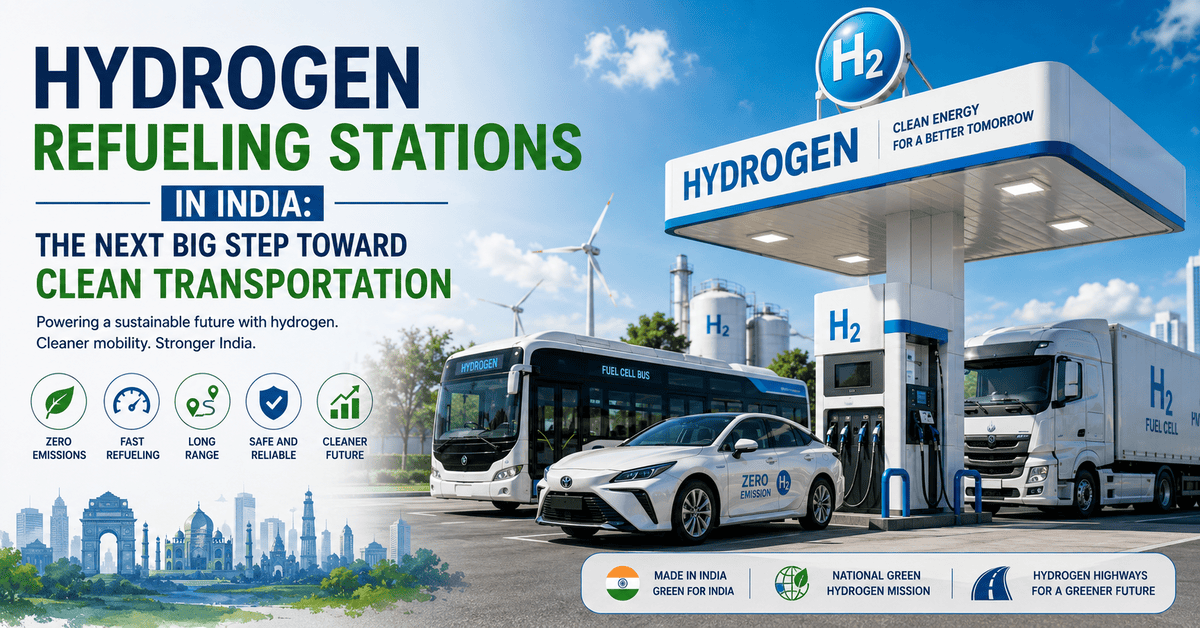
A hydrogen refueling station is a facility that stores, compresses, and dispenses hydrogen fuel to hydrogen-powered vehicles. Similar to conventional fuel stations, HRS enables quick refueling—often within a few minutes—making hydrogen an attractive option for commercial vehicles that require minimal downtime.
The primary components of a hydrogen refueling station include:
- Hydrogen production or supply system
- Storage tanks
- Compression equipment
- Cooling systems (for cryogenic liquid hydrogen, where applicable)
- Fuel dispensers
- Safety and monitoring systems
These facilities are designed to deliver hydrogen safely and efficiently while meeting stringent operational standards.
Why India Needs Hydrogen Refueling Infrastructure
The transportation sector contributes significantly to India’s carbon emissions and fuel imports. While battery-electric vehicles are suitable for many applications, hydrogen fuel cell technology offers advantages in specific segments such as:
- Heavy-duty trucks
- Long-distance buses
- Commercial fleets
- Rail transportation
- Marine transport
Hydrogen vehicles provide:
- Fast refueling times
- Long driving ranges
- High energy density
- Zero tailpipe emissions
To unlock these benefits, a reliable network of hydrogen refueling stations is essential. Without fueling infrastructure, widespread hydrogen vehicle adoption remains impossible.
India’s Hydrogen Mobility Vision
India’s National Green Hydrogen Mission aims to establish the country as a global hub for hydrogen production, utilization, and export. Transportation is expected to become one of the major sectors benefiting from hydrogen adoption.
Government initiatives include:
- Hydrogen-powered bus pilot programs
- Hydrogen truck demonstrations
- Hydrogen railway projects
- Hydrogen highway development
- Green hydrogen production incentives
In January 2024, the Ministry of New and Renewable Energy (MNRE) sanctioned five pilot projects under NGHM for road transport, comprising 37 vehicles (15 fuel cell-based and 22 hydrogen internal combustion engine-based) and 9 hydrogen refueling stations. These vehicles will operate across 10 routes, including Greater Noida–Delhi–Agra, Pune–Mumbai, Ahmedabad–Vadodara–Surat, and NH-16 Visakhapatnam–Bayyavaram.
The Rise of Hydrogen Highways
One of the most exciting developments is India’s plan to create hydrogen-powered transportation corridors along major highways.
The government has announced pilot projects to establish hydrogen fueling infrastructure on selected national highway routes. These hydrogen highways are intended to support heavy-duty freight transportation, where battery-electric solutions may face limitations related to range, charging time, and payload capacity.
To overcome infrastructure challenges, the government plans to install hydrogen refueling stations every 200 km, beginning with pilot projects in 10 short corridors of 100–200 km, with longer corridors such as Delhi–Mumbai under consideration.
Potential benefits include:
- Reduced logistics emissions
- Lower fossil fuel dependency
- Improved energy security
- Faster adoption of hydrogen trucks and buses
Hydrogen corridors could become the backbone of India’s future clean freight network.
Current Status of Hydrogen Refueling Stations in India
India is still in the early stages of hydrogen fueling infrastructure development. Initial hydrogen refueling facilities have primarily been established for research, demonstration, and pilot projects.
One of the most notable examples is the hydrogen refueling facility developed by Indian Oil Corporation’s (IOCL) R&D center in Faridabad, which supports hydrogen vehicle testing and demonstration programs. IOCL has also tendered for setting up a hydrogen production system and dispensing station for refueling hydrogen vehicles at its R&D facility. Additionally, IOCL is setting up India’s largest green hydrogen plant at its Panipat refinery, aiming to produce 10,000 tonnes annually by 2027.
Industry and government roadmaps envision a gradual expansion of hydrogen stations across strategic industrial zones, logistics corridors, and urban transportation hubs throughout the decade.
Key Benefits of Hydrogen Refueling Stations
|
Benefit |
Description |
|
Faster Refueling |
Unlike battery charging, hydrogen vehicles can typically refuel within minutes, improving operational efficiency for commercial fleets. |
|
Longer Driving Range |
Hydrogen fuel cell vehicles can travel longer distances without requiring frequent refueling, making them ideal for heavy transport applications. |
|
Zero Tailpipe Emissions |
Hydrogen fuel cells emit only water vapor, contributing to cleaner air and reduced greenhouse gas emissions. |
|
Support for Heavy Transportation |
Hydrogen is particularly suitable for trucks, buses, trains, and industrial vehicles where battery weight and charging times can become challenges. |
|
Enhanced Energy Security |
Producing green hydrogen domestically can help reduce India’s dependence on imported crude oil and fossil fuels. |
Challenges to Overcome
Despite its promise, hydrogen refueling infrastructure faces several challenges:
High Initial Investment
Building hydrogen refueling stations requires significant capital investment in storage, compression, dispensing, and safety systems.
Hydrogen Production Costs
Green hydrogen remains more expensive than conventional fuels, although costs are expected to decline with technological advancements and economies of scale.
Infrastructure Expansion
A nationwide network of hydrogen stations will require coordinated efforts between government agencies, energy companies, vehicle manufacturers, and infrastructure developers.
Public Awareness and Adoption
Hydrogen-powered vehicles are still relatively new in India, requiring increased awareness, pilot programs, and industry participation.
The Future of Hydrogen Refueling in India
The coming years are expected to witness significant investments in hydrogen production, storage, transportation, and refueling infrastructure. As green hydrogen costs decrease and fuel cell technology matures, hydrogen refueling stations could become a common feature along major transportation routes.
The government aims to deploy over 1,000 hydrogen-powered trucks and buses by 2030, with nearly 50 vehicles expected to be operational by the end of 2026.
Future developments may include:
- Large-scale hydrogen highway networks
- Commercial hydrogen truck fleets
- Hydrogen-powered public transport systems
- Hydrogen rail and marine applications
- Smart hydrogen refueling stations integrated with renewable energy
These advancements could help India achieve its long-term clean energy and net-zero ambitions while strengthening its position in the global hydrogen economy.
Conclusion
Hydrogen refueling stations represent a critical piece of India’s clean transportation future. By enabling the adoption of hydrogen fuel cell vehicles across freight, public transit, railways, and commercial transportation, these stations can accelerate the country’s transition toward low-carbon mobility.
While challenges related to infrastructure costs and hydrogen production remain, ongoing government initiatives, pilot projects, and private-sector investments are laying the foundation for a robust hydrogen ecosystem. As India expands its hydrogen infrastructure, refueling stations will play a vital role in driving sustainable transportation and supporting the nation’s broader clean energy goals.