



Introduction
Hydrogen is becoming an increasingly important energy carrier and industrial gas, with applications ranging from refining and chemical processing to fuel cells, mobility, energy storage, and emerging clean-energy systems.
As hydrogen applications expand, gas purity, measurement accuracy, and process reliability are becoming increasingly important. Hydrogen gas analyzers play a critical role in this ecosystem by helping operators measure hydrogen quality, detect impurities, monitor process conditions, and verify that hydrogen meets the required specification before it moves to the next stage of the value chain.
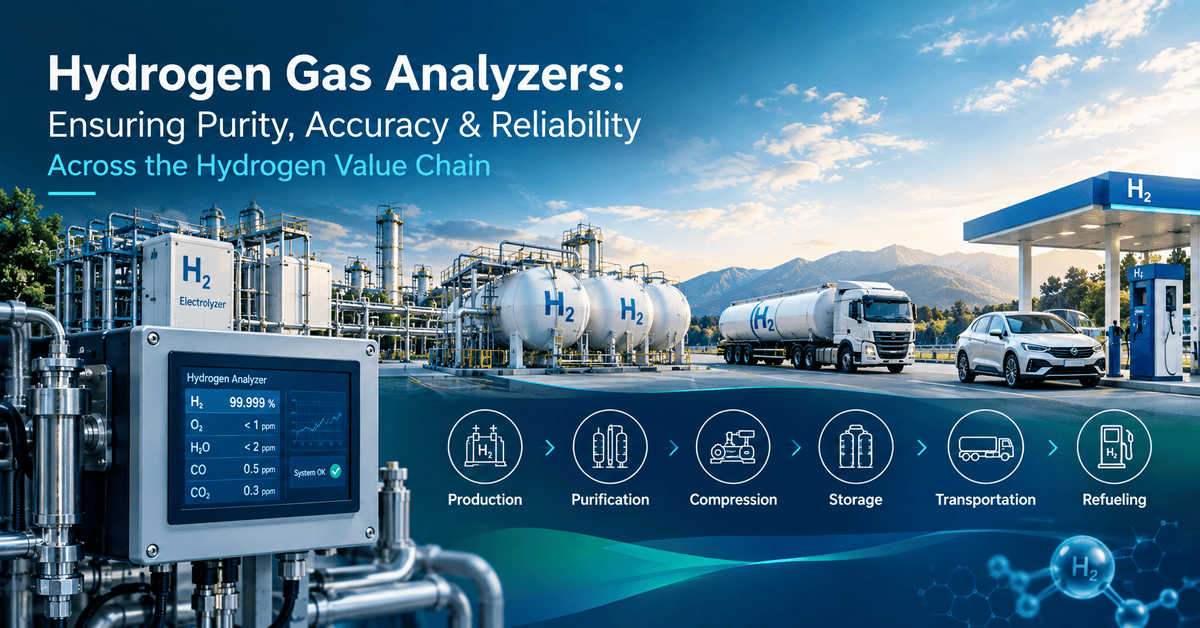
From hydrogen production and purification to compression, storage, transportation, and refueling, reliable gas analysis supports safe operation, product quality, equipment protection, and regulatory compliance.
Why Hydrogen Purity Matters
Hydrogen is often described as a clean fuel because its use in a fuel cell produces electricity with water as the primary reaction product. However, the performance and durability of a hydrogen system depend heavily on the quality of the hydrogen supplied to it.
Even small quantities of certain contaminants can affect downstream equipment, particularly fuel-cell catalysts and membranes.
Potential impurities may include:
- Oxygen and nitrogen.
- Water and moisture.
- Carbon monoxide.
- Carbon dioxide.
- Hydrocarbons.
- Sulfur-containing compounds.
- Ammonia.
- Halogenated compounds.
- Particulates.
- Other process-specific contaminants.
The acceptable concentration of each impurity depends on the application and applicable specification. Hydrogen intended for fuel-cell electric vehicles requires especially strict control of contaminants because some impurities can affect fuel-cell performance and durability. ISO 14687 specifies minimum hydrogen-fuel quality characteristics for vehicular, stationary, industrial, commercial, and other applications.
This makes accurate gas analysis an essential part of hydrogen-quality management.
What Is a Hydrogen Gas Analyzer?
A hydrogen gas analyzer is an analytical instrument designed to measure the concentration of hydrogen or specific components within a gas mixture.
Depending on the application, an analyzer may measure:
- Hydrogen concentration.
- Oxygen concentration.
- Moisture or dew point.
- Carbon monoxide.
- Carbon dioxide.
- Hydrocarbon compounds.
- Sulfur compounds.
- Nitrogen and other inert gases.
- Other trace impurities.
Different measurement technologies are selected according to the gas composition, required detection limit, operating pressure, temperature, response time, and application.
Thermal-Conductivity Analyzers
Thermal-conductivity analyzers measure gases according to differences in their ability to conduct heat. They can be useful for measuring hydrogen concentration because hydrogen has substantially different thermal-conductivity characteristics from many other gases.
However, the measurement can be affected by the composition of the background gas. Therefore, the analyzer must be selected and calibrated for the actual process stream.
Electrochemical Sensors
Electrochemical technologies can be used to measure specific gases, including oxygen. They may be useful where selective measurement of a particular component is required.
Their suitability depends on factors such as the concentration range, gas composition, temperature, humidity, sensor lifetime, and cross-sensitivity.
Moisture and Dew-Point Measurement
Moisture analyzers help determine water content in hydrogen. Moisture control is important because excessive water can affect equipment, purification systems, storage components, and downstream fuel-cell applications.
Gas Chromatography
Gas chromatographs separate and quantify multiple components within a gas mixture. They are useful when detailed composition analysis and measurement of several impurities are required.
The appropriate analyzer technology depends on the measurement objective rather than simply the hydrogen concentration.
Hydrogen Analysis Across the Value Chain
Hydrogen does not move directly from production to end use. It passes through multiple stages, and each stage can introduce different measurement requirements.
Hydrogen Production
Hydrogen can be produced using several technologies, including:
- Electrolysis.
- Steam methane reforming.
- Autothermal reforming.
- Industrial by-product recovery.
- Other production processes.
In electrolysis, gas analysis can help monitor the quality of hydrogen produced and identify unwanted oxygen, moisture, or cross-contamination.
Continuous monitoring can provide early indications of process deviations and help maintain consistent product quality.
Purification
After production, hydrogen may require purification depending on the production technology and intended application.
Gas analyzers can help verify whether the purification system is achieving the required quality. Monitoring before and after purification can also help identify performance changes in purification equipment.
Compression
Hydrogen is commonly compressed before storage, transportation, or dispensing.
During compression, monitoring gas quality can help ensure that the hydrogen entering downstream systems remains within the required specification. Analyzer systems can therefore form part of a broader quality-control strategy around compression stations.
Storage and Transportation
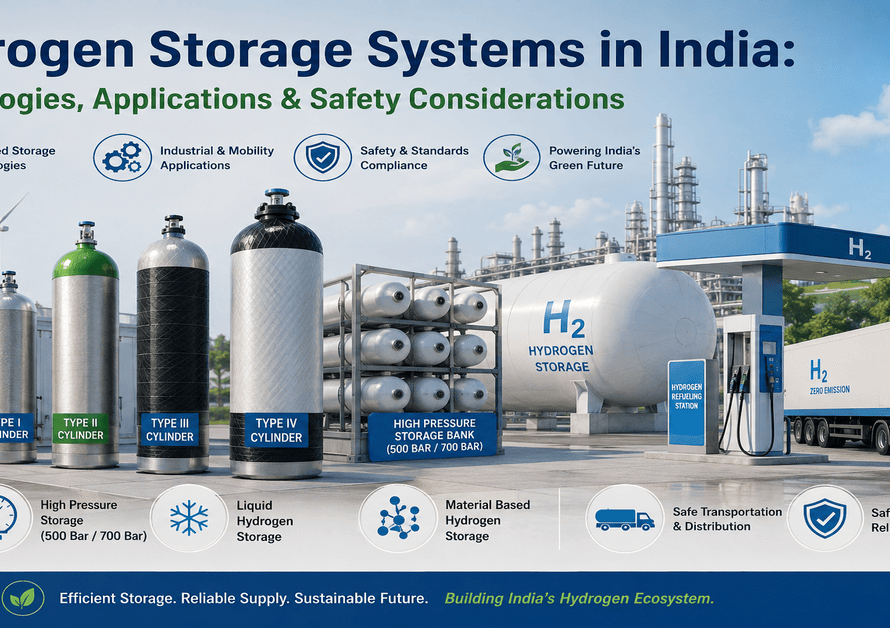
Hydrogen may be stored in cylinders, cascade systems, tube trailers, pipelines, or other storage systems depending on the application and pressure requirements.
Gas analysis can help verify hydrogen quality during filling, transfer, and delivery. This is particularly important when hydrogen from different production or supply sources enters a common storage or distribution system.
Hydrogen Refueling Stations
Hydrogen refueling stations require consistent gas quality because the supplied hydrogen ultimately reaches a vehicle’s fuel-cell system.
Analysis systems can be used to verify hydrogen quality and monitor relevant contaminants before dispensing. For mobility applications, the analysis process should be aligned with the applicable hydrogen-fuel-quality requirements and station standards.
Why Trace-Impurity Detection Matters
Hydrogen purity is not simply about achieving a high percentage of hydrogen.
A gas stream containing 99.999% hydrogen may still require detailed analysis because the remaining fraction can contain several different impurities. For high-purity applications, trace-level measurement becomes increasingly important.
Monitoring oxygen and moisture at low concentrations can help identify:
- Air or oxygen ingress.
- Drying-system performance.
- Contamination during handling.
- Process abnormalities.
- Potential quality issues before delivery.
Fuel-cell hydrogen specifications include limits for multiple contaminants, including water, oxygen, nitrogen and argon, carbon monoxide, carbon dioxide, hydrocarbons, sulfur compounds, ammonia, halogenated compounds, and particulates.
This is why hydrogen-quality management should combine overall-purity measurement with targeted impurity analysis.
Hydrogen Analyzers and Fuel-Cell Applications
Fuel cells are particularly sensitive to gas quality. Certain contaminants can interact with catalysts, affect membrane performance, or interfere with electrochemical reactions.
As a result, hydrogen supplied to fuel-cell applications must meet stringent quality requirements. Gas analysis can support:
- Hydrogen-quality verification.
- Contamination detection.
- Supplier quality control.
- Refueling-station monitoring.
- Fuel-cell protection.
- Consistent system performance.
- Quality documentation.
For hydrogen mobility, this becomes increasingly important as India develops hydrogen-powered buses, trucks, commercial vehicles, and associated refueling infrastructure.
Accuracy, Repeatability, and Reliability
Selecting a hydrogen analyzer is not only about choosing the lowest detection limit. Several parameters should be evaluated.
Measurement Accuracy
The analyzer should provide accuracy appropriate for the intended application and required specification.
Repeatability
Repeated measurements should remain consistent under similar operating conditions.
Detection Limit
For trace impurities, the instrument must be capable of detecting concentrations below the relevant specification limit. The detection limit should not be confused with accuracy or quantification capability.
Response Time
Fast response can be important for process monitoring and detecting sudden changes in gas quality.
Calibration
Reliable calibration is essential for maintaining measurement confidence over time. Calibration procedures should be appropriate for the analyzer technology, gas composition, measurement range, and applicable standard.
Operating Conditions
The analyzer must be compatible with the expected:
- Pressure.
- Temperature.
- Gas composition.
- Flow rate.
- Moisture level.
- Contaminant concentration.
Sampling System
The analyzer is only one part of the measurement system. Sample conditioning, tubing, filtration, pressure reduction, and flow control can significantly influence measurement quality.
The Importance of the Sampling System
One of the most overlooked aspects of gas analysis is the sample-handling system.
A highly accurate analyzer can still produce unreliable results if the sample reaching the instrument is contaminated, diluted, delayed, or otherwise altered.
A hydrogen sampling system may include:
- Sample probe.
- Isolation valve.
- Filter.
- Pressure regulator.
- Flow controller.
- Moisture-management components.
- Sample tubing.
- Analyzer.
- Calibration-gas connection.
The design should minimize dead volume, leakage, adsorption, contamination, and unwanted interaction between the sample and system materials.
For trace-level measurements, these considerations become especially important. Sample lines may also require heat tracing, drying, filtration, or special materials to prevent condensation and sample loss.
Gas Analyzers and Hydrogen Safety
Hydrogen is highly flammable and can form flammable mixtures with air over a wide concentration range. Hydrogen facilities therefore require appropriate engineering controls, gas-detection systems, ventilation, pressure management, and safety procedures.
It is important to distinguish between gas-quality analyzers and hydrogen leak detectors.
A hydrogen gas analyzer primarily evaluates gas composition or purity, while a leak-detection system is designed to identify unintended hydrogen releases. These instruments serve different purposes, although both can contribute to overall system safety.
India’s National Green Hydrogen Mission standards framework lists hydrogen-detection requirements for stationary applications. IS 16253:2016, based on ISO 26142:2010, specifies performance requirements and test methods for stationary hydrogen-detection apparatus.
Analyzer installations should also consider:
- Hazardous-area requirements.
- Material compatibility.
- Pressure ratings.
- Ventilation.
- Electrical classification.
- Sample-exhaust routing.
- Applicable safety standards.
Standards and Quality Requirements
Hydrogen-quality requirements vary depending on the end application.
ISO 14687:2025 is the current international hydrogen-fuel-quality specification and covers minimum quality characteristics for hydrogen intended for several applications, including vehicular and stationary use.
India’s standards framework includes IS 16061:2021, which is based on ISO 14687:2019. BIS has also undertaken work to align the national standard with the 2025 revision of ISO 14687.
Organizations operating hydrogen systems should identify the relevant specification before selecting an analyzer.
The analyzer’s:
- Measurement range.
- Detection limit.
- Accuracy.
- Calibration method.
- Materials of construction.
- Pressure rating.
- Response time.
- Installation requirements.
should all be evaluated against the intended application.
India’s Growing Need for Hydrogen Quality Monitoring
India is developing its hydrogen ecosystem through initiatives supporting green hydrogen production, industrial applications, mobility, and associated infrastructure.
As hydrogen projects expand from pilot-scale systems toward larger commercial installations, measurement and quality-control requirements will become increasingly important.
The development of:
- Green hydrogen production plants.
- Electrolyzer projects.
- Hydrogen storage systems.
- Compression facilities.
- Hydrogen refueling stations.
- Industrial hydrogen applications.
- Hydrogen mobility projects.
creates a growing need for dependable gas-analysis solutions.
Accurate measurement can help operators move from simply producing hydrogen to managing consistent, specification-based hydrogen quality across the supply chain.
Choosing the Right Hydrogen Analyzer
There is no single analyzer that is ideal for every hydrogen application.
Before selecting an instrument, organizations should define the following:
1. What needs to be measured?
Is the requirement hydrogen concentration, oxygen, moisture, carbon monoxide, carbon dioxide, hydrocarbons, sulfur compounds, or multiple impurities?
2. What concentration range is required?
Percent-level measurement and trace-impurity measurement require different analytical capabilities.
3. What is the operating pressure?
The analyzer and sample-conditioning system must be suitable for the pressure conditions.
4. What response time is required?
Continuous process control may require faster measurement than laboratory testing.
5. What standard applies?
The measurement system should support the applicable product-quality or process specification.
6. Where will the analyzer be installed?
Indoor laboratories, production plants, compression systems, and refueling stations may have very different installation requirements.
7. How will calibration be managed?
A practical calibration and maintenance plan should be considered from the beginning.
8. How will data be recorded?
For commercial hydrogen supply, quality records, calibration history, alarm logs, and measurement traceability may be important parts of the quality-management system.
From Measurement to Better Hydrogen Quality Management
Hydrogen gas analyzers are more than laboratory instruments. When integrated correctly into a hydrogen facility, they become part of the plant’s quality-management and process-monitoring architecture.
Real-time or periodic analysis can help organizations:
- Detect contamination early.
- Verify purification performance.
- Maintain product specifications.
- Protect downstream equipment.
- Improve process consistency.
- Support quality documentation.
- Reduce the risk of supplying off-specification hydrogen.
- Improve supplier and customer confidence.
As hydrogen infrastructure becomes more interconnected, reliable measurement will become increasingly important from production to final use.
Conclusion
The hydrogen economy depends not only on producing more hydrogen, but also on producing, handling, storing, transporting, and delivering hydrogen with consistent and verifiable quality.
Hydrogen gas analyzers provide the measurement capability needed to monitor purity and detect critical impurities throughout the hydrogen value chain.
From electrolyzers and purification systems to compressors, storage cascades, refueling stations, and fuel-cell applications, the right analytical solution can help improve accuracy, reliability, process control, and hydrogen-quality assurance.
For India’s developing hydrogen ecosystem, dependable gas analysis will play an increasingly important role in building a safe, efficient, and quality-driven hydrogen value chain.
The key is not simply to measure hydrogen concentration. It is to measure the right impurities, at the right detection limits, using a properly designed sampling and calibration system.